Open & Traditional Surgery
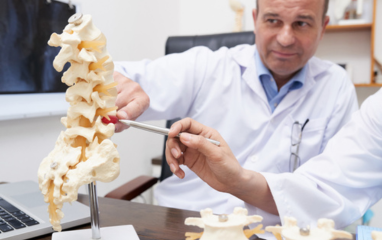
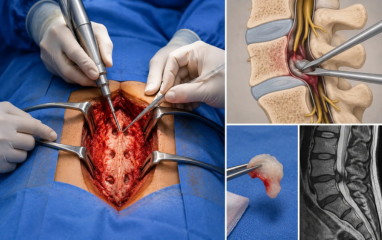
Open surgery is the age-old technique of spinal decompression that involves cutting of structures from skin to spinal canal and taking the pressure off the spinal cord under direct visualization with the naked eye.
This technique involves suturing of the muscles and the associated ligaments so the patients have slower recovery compared to the modern techniques of minimally invasive spine surgery.
Open surgery is the age-old technique of spinal decompression that involves cutting of structures from skin to spinal canal and taking the pressure off the spinal cord under direct visualization with the naked eye.
This technique involves suturing of the muscles and the associated ligaments so the patients have slower recovery compared to the modern techniques of minimally invasive spine surgery.
Types of Open & Traditional Surgery:
Laminectomy /Discectomy
The traditional and GOLD standard technique of Open decompression still stands tall, although there have been many advancements in the form of Microscopic or Tubular decompression. These advance techniques use serial dilation of the muscles and external magnification via a Microscope. This reduces incision size and gives a clearer picture.
Spinal Fracture Stabalization
Fractures in spine can be broadly divided into 2 categories into traumatic and osteoporotic. Majority of the traumatic fractures are inherently unstable and require surgical intervention which now a days also possible via percutaneous minimally invasive techniques. Osteoporotic fractures on the other hand are secondary to weakening of bones.
Laminectomy /Discectomy
The traditional and GOLD standard technique of Open decompression still stands tall, although there have been many advancements in the form of Microscopic or Tubular decompression. These advance techniques use serial dilation of the muscles and external magnification via a Microscope. This reduces incision size and gives a clearer picture.
Spinal Fracture Stabalization
Fractures in spine can be broadly divided into 2 categories into traumatic and osteoporotic. Majority of the traumatic fractures are inherently unstable and require surgical intervention which now a days also possible via percutaneous minimally invasive techniques. Osteoporotic fractures on the other hand are secondary to weakening of bones.